On this page
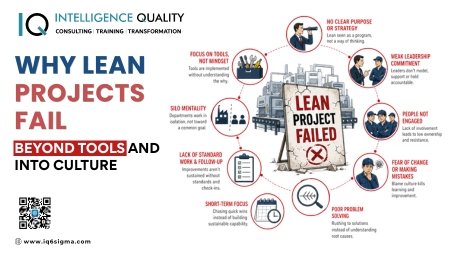
Lean methodology promises streamlined processes, reduced waste, and higher productivity. Yet, many organizations report that Lean projects fail to deliver the expected results, even after investing in training, consulting, and tools. Understanding this requires looking beyond the tools themselves to the people, culture, and organizational structures that surround them
1. Tools Alone Don’t Create Change
One of the most common misconceptions is that Lean tools like 5S, Kaizen, Value Stream Mapping, and Kanban, automatically improve processes. Tools are merely enablers; their effectiveness depends entirely on how they are applied. Without a clear understanding of the business context and objectives, projects often become exercises in checking boxes rather than solving real problems.
For example, implementing a Kanban system without analyzing upstream process bottlenecks may only shift delays from one stage to another, creating a false sense of improvement. Lean tools are powerful, but they are not magic. They require proper problem identification, measurement, and follow-through.
2. Leadership Gaps: The Silent Killer
Lean projects fail most often when leadership does not actively support or participate in improvement initiatives. Leaders play a critical role in:
- Setting clear goals aligned with business strategy
- Removing barriers that prevent process improvements
- Providing resources and time for teams to experiment
- Modeling behaviors that encourage continuous improvement
When leaders treat Lean as a “program” rather than a philosophy, teams struggle to gain traction. Employees quickly notice a lack of follow-through, and enthusiasm wanes. Investing in dedicated six sigma champion training helps executives and sponsors understand how to align projects with strategic goals and remove roadblocks effectively. In many cases, Lean projects stall not because of poor tools, but because leadership fails to champion change consistently.
3. Culture and Employee Engagement Matter More Than Tools
Lean is as much about culture as it is about process. Projects fail when employees:
- See Lean as top-down mandates rather than a participatory approach
- Lack training or confidence to identify and solve problems
- Fear making mistakes or suggesting changes
For instance, a manufacturing plant may introduce 5S audits to organize workspaces. If workers feel it is a policing exercise rather than a way to improve efficiency, compliance is superficial and improvements do not stick. Equipping frontline staff with practical skills through lean six sigma green belt training builds real confidence, creating a culture where employees feel ownership of processes and are empowered to take initiative.
4. Incomplete or Misaligned Metrics
Lean projects rely on measurement to demonstrate value. However, choosing the wrong metrics, or measuring too many things can misdirect efforts. Focusing solely on efficiency numbers without considering quality, employee satisfaction, or customer outcomes often results in suboptimal improvements.
A logistics company, for example, might optimize warehouse pick times aggressively. If this increases error rates in shipping, the net benefit is negative. Lean success depends on balanced metrics that reflect the true impact on the business.
5. Lack of Sustained Follow-Up
Even well-executed Lean projects can fail if improvements are not standardized and sustained. Teams may implement process changes, celebrate short-term gains, and then revert to old habits. This is often due to:
- Weak documentation or standard operating procedures
- Lack of ongoing coaching and mentoring
- Absence of periodic audits or reviews
Having experienced mentors who have completed six sigma black belt training ensures teams receive consistent guidance, governance, and reinforcement after the initial rollout. Lean is not a one-time project. It is a mindset, and continuous reinforcement is essential to make improvements last.
6. External Factors Can Influence Outcomes
Sometimes failure is not due to leadership or culture but external realities:
- Market volatility or sudden supply chain disruptions
- Regulatory or compliance changes
- Technology limitations or infrastructure bottlenecks
These factors can derail Lean initiatives, highlighting the need for flexibility and risk-aware planning.
Conclusion: Lean Success Requires More Than Tools
The failure of Lean projects rarely stems from the tools themselves. Lean is a philosophy that depends on:
- Committed leadership that actively supports change
- A culture of employee engagement and empowerment
- Well-chosen, relevant metrics
- Sustained follow-through and continuous improvement
Organizations that treat Lean as a toolkit for quick fixes will likely be disappointed. Those that build deep internal capability through structured lean six sigma certification and embed these principles into strategy, culture, and daily operations will see lasting results. In other words, Lean fails when it is treated as an event, but succeeds when it becomes the way an organization thinks, works, and improves.