On this page
Is your ESG data ready to stand up to independent review?
For FY 2026–27, the BRSR Core requirement reaches the top 1,000 listed entities by market capitalisation. With the latest SEBI framework allowing companies to opt for assessment or assurance, the focus is shifting from simply reporting ESG numbers to demonstrating that those numbers are reliable, traceable and supported by evidence.
That makes preparation important well before the BRSR is finalised.
What Is BRSR Core?
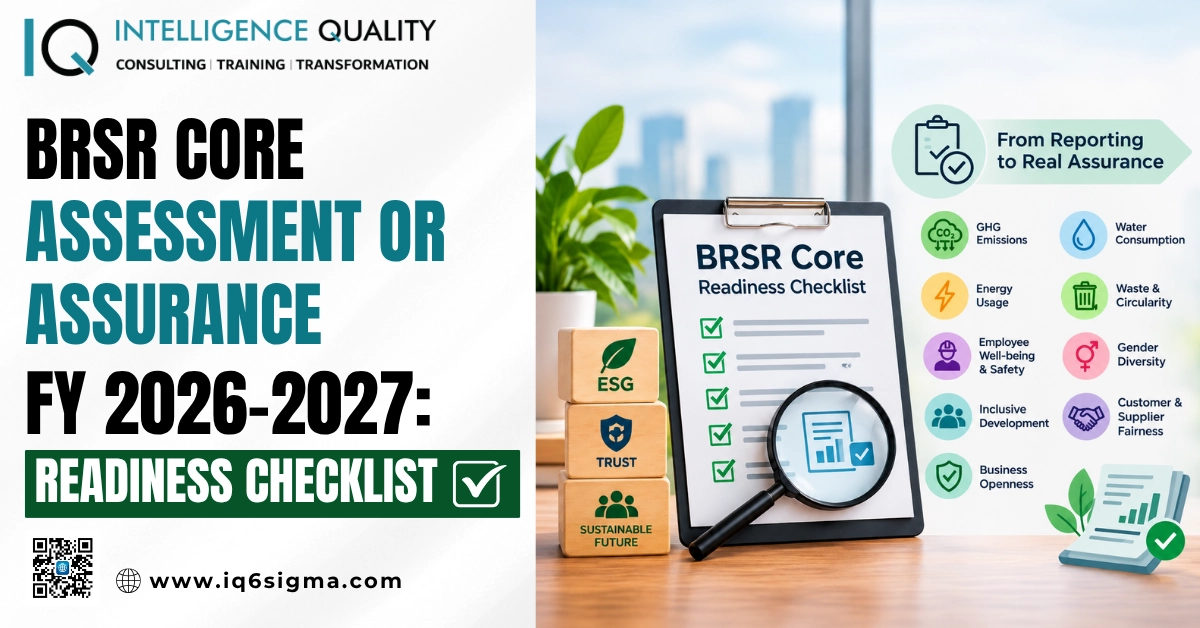
BRSR Core is a focused set of ESG KPIs within the broader Business Responsibility and Sustainability Report. It covers key areas such as GHG emissions, water, energy, waste and circularity, employee well-being and safety, gender diversity, inclusive development, customer and supplier fairness, and business openness.
The objective is straightforward: make important ESG information more consistent, comparable and credible.
FY 2026–27: What Companies Should Check
1. Confirm Applicability
First, confirm whether your organisation falls within the top 1,000 listed entities by market capitalisation for the applicable period.
If BRSR Core applies, involve the relevant teams early rather than treating it as a year-end reporting task. Building internal capability through structured ESG training in India can help cross-functional teams understand regulatory expectations from the ground up.
2. Know Where Every Number Comes From
This is perhaps the most important readiness question:
Can you trace every reported ESG number back to its original source?
Review the availability of:
- Energy and utility records
- GHG calculations and emission factors (see our guide on how companies measure their carbon footprint)
- Water consumption data
- Waste records
- Employee and safety records
- Gender diversity data
- Procurement and supplier information
- Customer-related records
- Supporting policies and documentation
A final spreadsheet is not enough. The underlying evidence matters.
3. Assign Clear Data Ownership
BRSR Core should not sit entirely with the sustainability team.
ESG information can come from EHS, HR, Finance, Operations, Procurement, Quality and Compliance. Each relevant metric should have a clear owner responsible for collecting, checking and supporting the data.
4. Check Your Reporting Boundary
Before numbers are consolidated, confirm which entities, locations and operations are included.
Also check whether the reporting boundary is consistent with the methodology used in previous reporting periods. Any industry-specific adjustments or estimations should be appropriately documented.
5. Test the Data Before the External Review
Do a simple internal challenge:
- Where did this number come from?
- Who prepared it?
- Who reviewed it?
- What evidence supports it?
- Does it match other company records?
This type of internal review can uncover gaps before an external assessment or assurance engagement begins.
6. Choose the Right Assessment or Assurance Route
Under the current SEBI framework, companies can opt for assessment or assurance of BRSR Core. Third-party assessment follows the standards developed by the Industry Standards Forum in consultation with SEBI.
Provider selection should therefore consider competence, independence, relevant ESG experience and potential conflicts of interest.
A Simple BRSR Core Readiness Test
Before the reporting cycle reaches its final stage, ask five questions:
- Is the data complete?
- Is the methodology documented?
- Is the evidence available?
- Is ownership clearly assigned?
- Can an independent reviewer follow the data trail?
If the answer to all five is yes, your organisation is in a much stronger position.
Don't Wait for the BRSR Deadline
BRSR Core readiness is not really about preparing one more ESG report. It is about building confidence in the information behind that report. For FY 2026–27, organisations covered by the requirement should start with their data, evidence and internal controls rather than waiting until the final reporting stage.
The strongest BRSR Core submission is one where every important number has a story behind it, and the evidence to prove it.
Frequently Asked Questions
- Is BRSR Core applicable to the top 1,000 listed entities in FY 2026–27?
Yes. SEBI's phased framework extends BRSR Core to the top 1,000 listed entities by market capitalization for FY 2026–27.
- Is assurance mandatory?
The current framework provides for assessment or assurance of BRSR Core.
- What should companies do first?
Start by mapping the BRSR Core KPIs to internal data owners, checking the reporting boundary and building an evidence trail for every material ESG figure.Equipping your team with an ESG certification online can also streamline how your departments interpret and document these disclosures.
- Which SEBI document should companies refer to?
The latest SEBI Master Circular for LODR Regulations, updated on 30 January 2026, should be used alongside the relevant BRSR Core and subsequent SEBI circulars.
Final Takeaway
BRSR Core readiness is no longer just about getting ESG numbers into the report. It is about being able to stand behind those numbers.
For FY 2026–27, organisations covered by the requirement should focus on three things: reliable data, clear accountability and strong supporting evidence. Starting early gives teams time to identify gaps, strengthen internal controls and resolve inconsistencies before the assessment or assurance process begins.
The goal is simple: when an ESG number is reported, your organisation should be able to explain where it came from, how it was calculated and what evidence supports it.
That is what turns BRSR Core reporting from a compliance exercise into credible ESG reporting.