On this page
A company may reduce its electricity consumption, provide a safe workplace and follow transparent business practices. But how can it demonstrate that these efforts are making a real difference?
This is where ESG comes in.
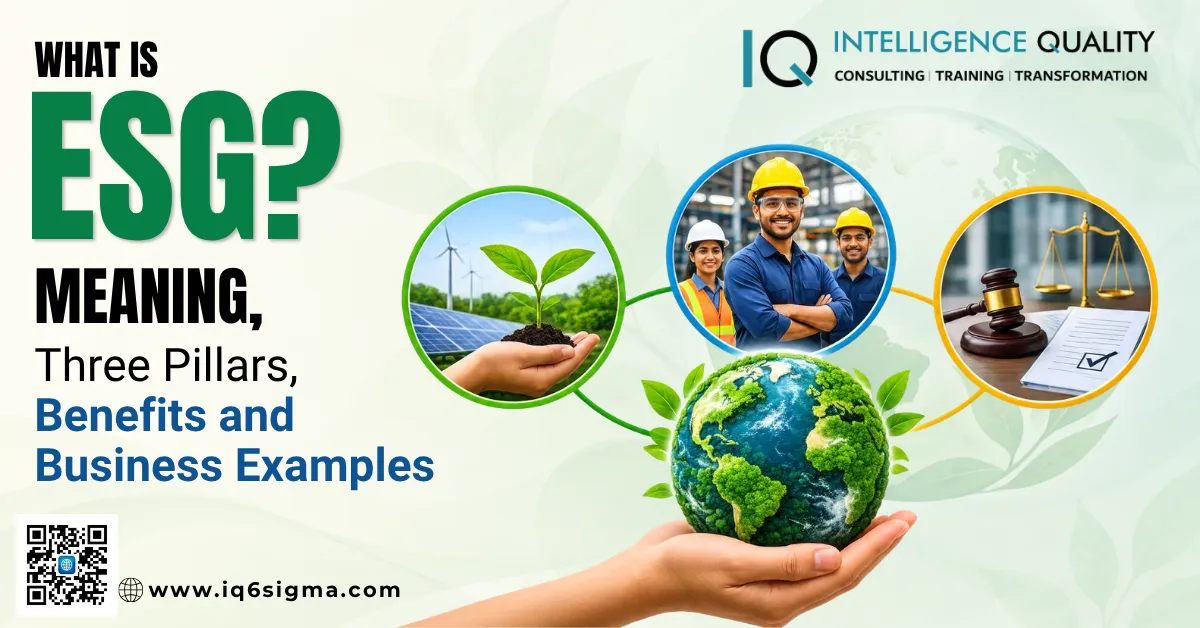
ESG stands for Environmental, Social and Governance. It is a framework used to understand how an organization manages its environmental impact, its responsibilities towards people, and the way it is governed. It also helps businesses and investors evaluate related risks, opportunities and long-term performance.
ESG is no longer just a topic for large corporations or investors. Manufacturers, service providers, suppliers and growing businesses are increasingly expected to understand how their operations affect people and the environment, and how responsibly they conduct business.
What Does ESG Mean in Business?
ESG helps organizations look beyond financial results and examine how their business practices affect the environment, employees, customers, suppliers and other stakeholders.
It brings three areas into focus:
- Environmental: How does the business use natural resources and manage its environmental impact?
- Social: How does the business treat its employees, customers, suppliers and communities?
- Governance: How does the business make decisions, maintain accountability and ensure ethical conduct?
These areas are interconnected. For example, a factory may invest in energy-efficient equipment to reduce emissions and operating costs. However, if the equipment creates safety risks for employees or the investment is approved without proper oversight, the business still has important ESG issues to address.
The purpose of ESG is to help organizations identify relevant issues, set measurable objectives, monitor performance and make better-informed decisions.
What Are the Three Pillars of ESG?
1. Environmental (E): Managing Impact on the Planet
The environmental pillar examines how a business affects the natural environment and manages environmental risks.
Key areas include:
- Greenhouse gas emissions and climate change
- Energy consumption and energy efficiency
- Water usage and wastewater management
- Waste reduction, recycling and pollution prevention
- Raw material consumption and resource efficiency
- Biodiversity and nature-related impacts, where relevant
Business example: A manufacturing company measures its electricity consumption, identifies equipment that uses excessive energy and introduces energy-efficient alternatives. It then tracks energy use per unit produced to determine whether the changes are delivering measurable improvements.
The important point is that an environmental initiative should be assessed using evidence. Installing solar panels, for example, is an action; measuring the resulting change in electricity consumption and emissions helps demonstrate its impact.
2. Social (S): How a Business Treats People
The social pillar focuses on an organization's relationships with its workforce, customers, suppliers and communities.
Key areas include:
- Employee health, safety and wellbeing
- Fair employment practices and equal opportunity
- Human rights and labour practices
- Employee training and development
- Customer safety, satisfaction and data privacy
- Responsible sourcing and supplier working conditions
- Community impact
Business example: An automotive component manufacturer reviews workplace injury data, provides role-specific safety training and evaluates whether corrective actions have reduced recurring incidents.
Simply conducting safety training does not establish that workplace risks are under control. Reviewing incidents, employee feedback and the effectiveness of preventive measures provides a clearer picture.
Social performance is about how people are treated in everyday business operations, not only about community initiatives.
3. Governance (G): Running the Business Responsibly
Governance covers the systems, policies and practices through which an organization is directed, monitored and held accountable.
Key areas include:
- Business ethics and codes of conduct
- Anti-bribery and anti-corruption measures
- Board oversight and accountability
- Risk management and internal controls
- Accurate reporting and transparency
- Conflict-of-interest management
- Data protection and cybersecurity oversight
Business example: A company establishes a formal process for employees to report suspected misconduct, investigates complaints consistently and maintains appropriate records of the actions taken.
A written policy alone is not enough. Effective governance requires clear responsibilities, consistent implementation and evidence that controls work as intended.
What Are the Benefits of ESG for Businesses?
ESG can help businesses manage issues that may otherwise lead to higher costs, operational disruption, reputational damage or lost business opportunities. The benefits depend on the quality of implementation and the issues relevant to each organization.
Improved risk management: Monitoring energy use, workplace safety, supplier practices and governance weaknesses can help businesses identify potential problems earlier and take preventive action.
Better operational efficiency: Tracking electricity, water, material consumption and waste can reveal avoidable costs. Environmental improvements may therefore support both resource conservation and operational performance.
Stronger customer and supplier relationships: Large customers may assess suppliers on environmental performance, labour practices, ethics and compliance. Demonstrating responsible practices can help suppliers respond to these expectations and compete for business opportunities.
Greater investor and lender confidence: Investors and lenders may consider material ESG risks and opportunities when evaluating a business. Reliable data and transparent reporting can support their assessment, although they do not guarantee investment or financing.
Improved employee engagement: Safe working conditions, fair treatment, professional development and transparent management can contribute to a healthier workplace and help organizations attract and retain talent.
Better preparedness for changing requirements: Monitoring relevant regulations, customer expectations and reporting frameworks helps organizations identify emerging obligations and prepare for them in a timely manner.
ESG does not guarantee higher profits or eliminate business risks. Its value lies in identifying important issues, managing them systematically and measuring progress over time.
ESG Examples Across Different Industries
ESG priorities vary by industry. A manufacturing company may focus on emissions and worker safety, while a software company may give greater attention to data privacy, employee wellbeing and cybersecurity.
| Industry | Environmental focus | Social focus | Governance focus |
| Manufacturing | Energy efficiency, emissions and waste | Worker safety and labour practices | Quality controls, ethics and regulatory compliance |
| Automotive and components | Material efficiency and supplier environmental performance | Workplace safety and responsible sourcing | Supplier due diligence and traceability |
| IT and IT services | Data-centre energy use and electronic waste | Employee wellbeing and inclusion | Data privacy, cybersecurity and ethical conduct |
| Healthcare and pharmaceuticals | Waste disposal, water and energy use | Patient safety and employee protection | Data integrity, product quality and compliance |
| Logistics | Fuel consumption and fleet emissions | Driver safety and working conditions | Route controls, compliance and transparent reporting |
| Retail and consumer goods | Packaging, resource use and waste | Responsible sourcing and consumer protection | Product claims, supplier oversight and ethical marketing |
These are illustrative examples, not a universal checklist. Each organization should identify the ESG issues that are most relevant to its operations, stakeholders and business risks.
How Can a Business Start Implementing ESG?
ESG implementation does not need to begin with an expensive reporting system. A practical first step is to understand the organization's current performance and identify where improvement is most needed.
Step 1: Identify relevant ESG issues.
Review the organization's activities, industry, supply chain, stakeholder expectations and applicable requirements. Prioritize issues that could have a meaningful impact on the business or its stakeholders.
Step 2: Establish a baseline.
Collect available information on indicators such as energy consumption, emissions, workplace incidents, employee training, supplier assessments and governance controls. Check the reliability and completeness of the data.
Step 3: Set measurable objectives.
Choose realistic targets based on the baseline. For example, a factory might aim to reduce energy consumed per unit of production rather than setting a target without knowing its current performance.
Step 4: Assign responsibility.
Define who will collect data, implement actions, review results and report progress. ESG should involve relevant functions such as operations, HR, procurement, finance, quality and senior management.
Step 5: Monitor results and improve.
Review performance at planned intervals, investigate gaps and update actions when results fall short of expectations. Retain supporting evidence for reported figures and claims.
A structured approach helps prevent ESG from becoming a collection of disconnected activities.
What Is the Difference Between ESG, Sustainability and CSR?
These terms are related, but they do not mean the same thing.
| Term | Meaning | Example |
| ESG | A framework for assessing and managing environmental, social and governance issues using relevant information and indicators | Tracking emissions, workplace safety and ethics controls |
| Sustainability | A broader goal of meeting present needs while considering long-term environmental, social and economic impacts | Developing a business strategy that uses resources responsibly over time |
| CSR | Corporate Social Responsibility, which commonly refers to a company's responsibilities and social initiatives; in India, it also has a specific legal meaning under Section 135 of the Companies Act, 2013, where applicable | Funding a community education programme or supporting local healthcare |
The distinction matters because a company can carry out community projects through CSR while still having weaknesses in workplace safety, emissions management or governance.
Similarly, publishing an ESG report does not automatically mean that a business operates sustainably. The underlying practices, quality of data and results matter more than the report itself.
What Is ESG Reporting in India?
ESG reporting communicates information about an organization's environmental, social and governance performance, risks, policies and practices.
In India, the Securities and Exchange Board of India (SEBI) introduced the Business Responsibility and Sustainability Report (BRSR) framework for applicable listed entities. BRSR provides a structured way to disclose information about responsible business practices.
The reporting requirements depend on the organization's regulatory status and the rules applicable to it. Not every business in India has the same mandatory ESG reporting obligations.
Even where a company is not directly required to submit a BRSR, ESG information may be relevant when responding to customer questionnaires, supplier assessments, investor requests or group-company reporting requirements. Professionals looking to master these disclosure standards often pursue an ESG online course to stay aligned with evolving regulatory expectations.
Organizations should consult the current SEBI requirements and applicable regulations to determine their specific obligations.
Is ESG Relevant to Small and Medium-Sized Businesses?
Yes. Smaller businesses may not need the same reporting structure as a large listed company, but many of the underlying practices are relevant to organizations of every size.
A small manufacturer can start by monitoring electricity use, improving waste segregation, documenting safety training, reviewing supplier practices and establishing a clear code of conduct.
These measures can also help when larger customers ask suppliers to provide information about emissions, labour practices, compliance or responsible sourcing.
The most effective starting point is to focus on material issues, use reliable information and expand the process as the business's needs develop.
Final Takeaway: Why Should Businesses Understand ESG?
ESG stands for Environmental, Social and Governance. Its three pillars help organizations examine how they manage natural resources, treat people and conduct business.
For companies, ESG is not simply about making sustainability claims or publishing a report. It is about identifying relevant risks and opportunities, setting measurable objectives, maintaining reliable data and demonstrating responsible practices.
Businesses that equip their teams through the best ESG certification courses in India and begin with practical, evidence-based improvements can build a stronger foundation for customer expectations, operational resilience and long-term decision-making.
Understanding ESG is the first step. Measuring performance and turning that understanding into everyday business practices is what makes it meaningful.