
Images

ISO 9001:2015 Lead Auditor

What is Quality Management Systems (QMS)?

ISO 9001:2015 is the world’s most recognized standard for Quality Management Systems (QMS), designed to help organizations consistently deliver products and services that meet customer and regulatory requirements. This course provides participants with the knowledge and practical tools to implement, manage, and audit ISO 9001:2015 effectively. By focusing on process improvement, customer satisfaction, and operational excellence, the training equips professionals to build a strong foundation of quality that drives business growth and global competitiveness.

What is ISO 9001:2015 Lead Auditor Training?

The ISO 9001:2015 Lead Auditor course equips professionals with the knowledge and skills required to plan, conduct, report, and follow up on Quality Management System (QMS) audits in accordance with ISO 9001 and ISO 19011 guidelines. It prepares participants to take a leadership role in auditing by enhancing their ability to assess compliance, identify gaps, and drive continual improvement.
Who Should Attend?
  • Quality Managers and Officers
  • Operations and Production Managers
  • ISO Coordinators, Compliance Managers, and Internal Auditors
  • Business Owners and Entrepreneurs
  • Introduction
  • Terms and Definitions
  • IATF and oversight
  • Scope and Goals
  • Terms and Definitions
  • Process approach including Risk-based thinking
  • Audit types
  • Audit planning & Schedule
  • Group exercise
  • Onsite Audit-Opening meeting
  • Onsite Audit-Top Management Processes
  • Onsite Audit-Manufacturing
  • Auditing core tools
  • Writing Audit findings
  • Report writing and closing meeting
  • Non Conformity review and closure
  • Onsite Audit-Opening meeting
  • Onsite Audit-Top Management Processes
  • IATF
  • Audit process
  • IATF 16949 SI’s update

Enroll for Individual / Corporate Training

ISO 14001: 2015 Lead Auditor

What is the Environmental Management System (EMS)?

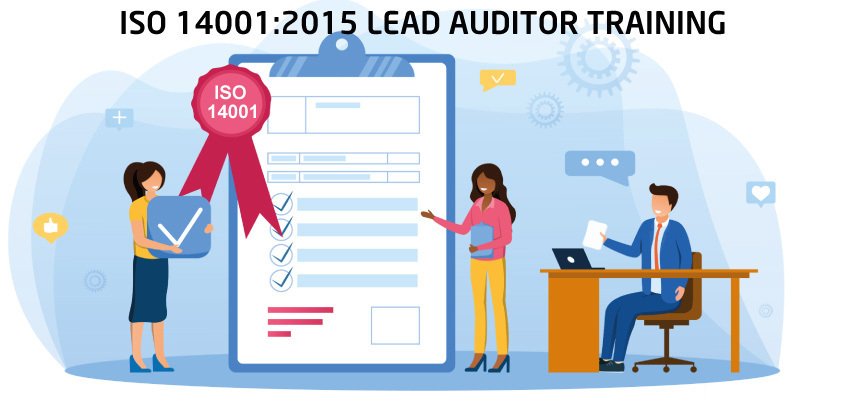
ISO 14001 is the internationally recognized standard for Environmental Management Systems (EMS). It provides a structured framework for organizations to manage their environmental responsibilities, reduce environmental impact, and ensure compliance with applicable laws and regulations. By adopting ISO 14001, businesses can improve sustainability performance, enhance operational efficiency, and demonstrate a clear commitment to environmental stewardship.
Who Should Attend?
  • Environmental Managers and Sustainability Officers
  • EHS / HSE Managers and Professionals
  • ISO Coordinators and Internal Auditors
  • Compliance Managers and Environmental Consultants
  • Professionals involved in environmental performance and sustainability initiatives
  • Introduction & Program Overview: Course objectives & Learning expectations
  • Overview of EMS & core Management Principles
  • More about High Level structure
  • Clause 4 – Context of the Organisation
  • Interactive Exercise 1: Environmental Context Mapping
  • Clause 5 - Leadership & Environmental Policy
  • Clause 6 - Planning; Risk & Opportunities
  • Interactive Exercise 2: Determine your Environmental Risk & Opportunities
  • Clause 7 - Support; Resources, Competence & Awareness
  • Quick Recap & Knowledge Refresh
  • Clause 7 - Support (Contd); Infrastructure, People & Knowledge
  • Interactive Exercise - 3; Identify mandatory EMS documents & records
  • Clause 8 - Operations including Life Cycle Perspective
  • Interactive Exercise - 4; Identify potential non-conformance
  • Clause 9 - Performance Evaluation; Monitoring & Measurement & compliance Evaluation
  • Clause 10 - Improvement; From Non-Conformance to Excellence
  • Recap & Reflections
  • Principles of Auditing – The DNA of a Good Auditor
  • Role of an EMS auditor
  • Performing an audit - Plan & Conduct an Audit
  • Audit reporting - Capturing Insights & Findings Effectively
  • Exercise - 5 - Writing Clear & Impactful Non-Conformity Reports
  • Role Play - Conduct Opening & Closing meeting with confidence
  • Recap
  • Insights on ISO 14001:2026 - what's changing & what to expect
  • Insights on Environmental Problem solving Tools
  • Clarifications - Addressing Practical Challenges
  • Real-world Case Studies
  • Mock Examination Paper Discussion
  • Key Learning outcome & Take away

Enroll for Individual / Corporate Training

ISO 27001: 2022 Lead Auditor

What is ISO 27001 - Information Security Management?

ISO 27001 is the leading international standard for Information Security Management Systems (ISMS). It provides a systematic approach to managing sensitive information, ensuring data confidentiality, integrity, and availability. ISO 27001 helps organizations identify and mitigate security risks, comply with legal and regulatory requirements, and build trust with customers and stakeholders through robust information security practices.

Who Should Attend?
  • Information Security Managers and Officers
  • IT Security and Risk Management Professionals
  • ISO Coordinators and Internal Auditors
  • Compliance and Data Protection Professionals
  • Consultants and professionals involved in information security governance
  • Introduction & Program Overview: Course objectives & Learning expectations
  • Overview of ISMS & core Management Principles (CIA – Confidentiality, Integrity, Availability)
  • More about High Level structure
  • Clause 4 – Context of the Organisation
  • Interactive Exercise 1: Context & Stake holder mapping for ISMS
  • Clause 5 - Leadership & Commitment; Information Security Policy; Roles & Responsibilities
  • Clause 6 - Planning; Risk & Opportunities |Information Security Risk Assessment & Treatment
  • Interactive Exercise 2: Risk Assessment & Risk Treatment Plan (RTP)
  • Clause 7 - Support; Resources, Competence, Awareness & Documentation
  • Quick Recap & Knowledge Refresh
  • Clause 7 - Support (Contd);
  • Interactive Exercise - 3; Identify mandatory ISMS documents & records
  • Clause 8 - Operations - Risk Treatment Implementation & Change Management
  • Annex A Controls (ISO 27001:2022): Overview of Controls (Organizational, People, Physical, Technological)
  • Clause 9 - Performance Evaluation; Monitoring & Measurement & Internal audit & management Review
  • Clause 10 - Improvement; Nonconformity, Corrective Action & Continual Improvement
  • Recap & Reflections
  • Principles of Auditing – The DNA of a Good Auditor
  • Role of an ISMS auditor
  • Performing an audit - Plan & Conduct an Audit
  • Audit reporting - Capturing Insights & Findings Effectively
  • Exercise - 5 - Writing Clear & Impactful Non-Conformity Reports
  • Role Play - Conduct Opening & Closing meeting with confidence
  • Recap
  • Certification process
  • Legal compliance considerations in ISMS
  • Insights onIncident Management, Data Breach Handling & Business Continuity
  • Real-world Case Studies
  • Mock Examination Paper Discussion
  • Key Learning outcome & Take away

Enroll for Individual / Corporate Training

ISO 45001: 2018 Lead Auditor

What is Occupational Health and Safety Management Systems (OHSMS)?

ISO 45001 is the international standard for Occupational Health and Safety Management Systems (OHSMS), designed to create safer workplaces, reduce risks, and enhance employee well-being. This course equips participants with the knowledge and practical skills to implement, manage, and audit ISO 45001 standards effectively. Whether you are a safety professional, manager, or part of a compliance team, the training will help you build a strong culture of health and safety while ensuring compliance with global best practices.
Who Should Attend?
  • Health & Safety Managers and Officers
  • EHS / HSE Professionals
  • ISO Coordinators and Internal Auditors
  • Compliance and Risk Management Professionals
  • Supervisors and Managers responsible for workplace safety
  • Introduction & Program Overview: Course objectives & Learning expectations
  • Overview of OHSMS & core Management Principles
  • More about High Level structure
  • Clause 4 – Context of the Organisation
  • Interactive Exercise 1: Context & Stake holder mapping for OH&S
  • Clause 5 - Leadership & worker participation
  • Clause 6 - Planning; Risk & Opportunities | Identify Legal & Other Requirements
  • Interactive Exercise 2: OH&S Risk & Opportunities | HIRA
  • Clause 7 - Support; Resources, Competence & Awareness
  • Quick Recap & Knowledge Refresh
  • Clause 7 - Support (Contd); Infrastructure, worker awareness & participation
  • Interactive Exercise - 3; Identify mandatory OH&S documents & records
  • Clause 8 - Operations including Emergency prepardness & Incident Management
  • Interactive Exercise - 4; Identify potential OH&S non-conformance
  • Clause 9 - Performance Evaluation; Monitoring & Measurement & compliance Evaluation
  • Clause 10 - Improvement; Incident investigation & correction action
  • Recap & Reflections
  • Principles of Auditing – The DNA of a Good Auditor
  • Role of an OH&S auditor
  • Performing an audit - Plan & Conduct an Audit
  • Audit reporting - Capturing Insights & Findings Effectively
  • Exercise - 5 - Writing Clear & Impactful Non-Conformity Reports
  • Role Play - Conduct Opening & Closing meeting with confidence
  • Recap
  • Certification process
  • Legal compliance considerations in OH&S
  • Insights on Incident Investigation Tools & techniques
  • Clarifications - Addressing Practical Challenges
  • Real-world Case Studies
  • Mock Examination Paper Discussion
  • Key Learning outcome & Take away

Enroll for Individual / Corporate Training

Sigma Chart Training Testimonial Testimonial