
ISO Lead Auditor Training Courses: ISO 9001, ISO 14001, ISO 27001 & ISO 45001

Choose the Right ISO Lead Auditor Course

Build the skills to plan, conduct and lead effective ISO management system audits. Select a standard below to explore its course.

ISO 9001:2026 Lead Auditor Training

Our ISO 9001 training courses are designed to suit your quality management and professional development needs. Choose the right programme, from general ISO 9001 training to specialised Lead Auditor training.

Who Should Attend?

  • Quality Managers and Officers
  • Operations and Production Managers
  • ISO Coordinators, Compliance Managers and Internal Auditors
  • Business Owners and Entrepreneurs

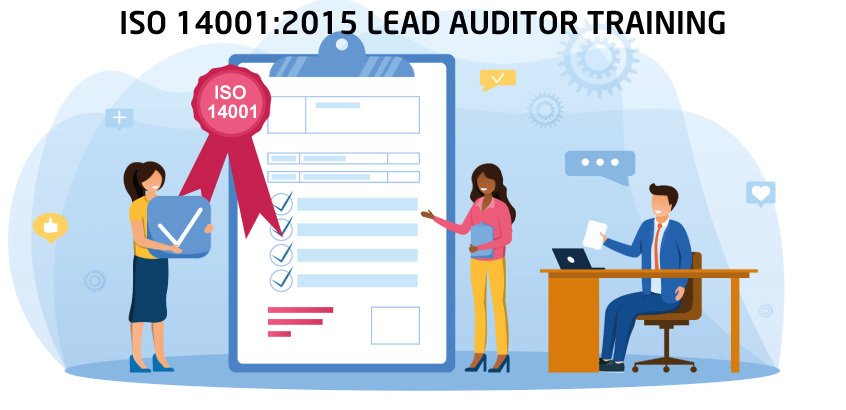
ISO 14001:2015 Lead Auditor Training

What is the Environmental Management System (EMS)?

ISO 14001 is the internationally recognized standard for Environmental Management Systems (EMS). It provides a structured framework for organizations to manage their environmental responsibilities, reduce environmental impact, and ensure compliance with applicable laws and regulations. By adopting ISO 14001, businesses can improve sustainability performance, enhance operational efficiency, and demonstrate a clear commitment to environmental stewardship.
Who Should Attend?

  • Environmental Managers and Sustainability Officers
  • EHS / HSE Managers and Professionals
  • ISO Coordinators and Internal Auditors
  • Compliance Managers and Environmental Consultants
  • Professionals involved in environmental performance and sustainability initiatives
ISO 14001:2015 Lead Auditor Training course
  • Introduction & Program Overview: Course objectives & Learning expectations
  • Overview of EMS & core Management Principles
  • More about High Level Structure
  • Clause 4 – Context of the Organisation
  • Interactive Exercise 1: Environmental Context Mapping
  • Clause 5 – Leadership & Environmental Policy
  • Clause 6 – Planning; Risk & Opportunities
  • Interactive Exercise 2: Determine your Environmental Risk & Opportunities
  • Clause 7 – Support; Resources, Competence & Awareness
  • Quick Recap & Knowledge Refresh
  • Clause 7 – Support (Contd); Infrastructure, People & Knowledge
  • Interactive Exercise 3: Identify mandatory EMS documents & records
  • Clause 8 – Operations including Life Cycle Perspective
  • Interactive Exercise 4: Identify potential non-conformance
  • Clause 9 – Performance Evaluation; Monitoring & Measurement & Compliance Evaluation
  • Clause 10 – Improvement; From Non-Conformance to Excellence
  • Recap & Reflections
  • Principles of Auditing – The DNA of a Good Auditor
  • Role of an EMS auditor
  • Performing an audit – Plan & Conduct an Audit
  • Audit reporting – Capturing Insights & Findings Effectively
  • Exercise 5: Writing Clear & Impactful Non-Conformity Reports
  • Role Play: Conduct Opening & Closing meeting with confidence
  • Recap
  • Insights on ISO 14001:2026 – what's changing & what to expect
  • Insights on Environmental Problem solving Tools
  • Clarifications – Addressing Practical Challenges
  • Real-world Case Studies
  • Mock Examination Paper Discussion
  • Key Learning outcome & Take away

Frequently Asked Questions about ISO 14001

What is ISO 14001?

ISO 14001 is the international standard for an Environmental Management System (EMS). It helps organizations manage environmental responsibilities, reduce environmental impact, and improve environmental performance.

What is an Environmental Management System (EMS)?

An EMS is a structured system that helps an organization identify, control, monitor, and improve its environmental performance while managing applicable legal and regulatory requirements.

Why is ISO 14001 important?

ISO 14001 helps organizations reduce environmental risks, improve resource efficiency, manage compliance, reduce waste, and demonstrate their commitment to responsible business practices.

Who should implement ISO 14001?

ISO 14001 can be implemented by organizations of any size and industry, including manufacturing, construction, healthcare, logistics, energy, and service organizations looking to improve environmental performance.

What are the benefits of ISO 14001 certification?

ISO 14001 can help organizations improve environmental performance, reduce waste and resource consumption, strengthen compliance, control costs, and build greater confidence among customers and stakeholders.

What are the key requirements of ISO 14001?

Key requirements include understanding the organization's context, leadership, environmental planning, operational controls, compliance obligations, performance evaluation, and continual improvement.

How is ISO 14001 different from ISO 9001?

ISO 14001 focuses on environmental management, while ISO 9001 focuses on quality management and customer satisfaction. Both use a structured management system approach and can be integrated within an organization.

What is ISO 14001 Lead Auditor training?

ISO 14001 Lead Auditor training develops the skills needed to plan, conduct, report, and follow up on Environmental Management System audits. IQ provides practical training for professionals looking to build expertise in environmental auditing and management systems.

Enroll for Individual / Corporate Training

ISO 27001:2022 Lead Auditor Training

What is ISO 27001 – Information Security Management?

ISO 27001 is the leading international standard for Information Security Management Systems (ISMS). It provides a systematic approach to managing sensitive information, ensuring data confidentiality, integrity, and availability. ISO 27001 helps organizations identify and mitigate security risks, comply with legal and regulatory requirements, and build trust with customers and stakeholders through robust information security practices.

Who Should Attend?

  • Information Security Managers and Officers
  • IT Security and Risk Management Professionals
  • ISO Coordinators and Internal Auditors
  • Compliance and Data Protection Professionals
  • Consultants and professionals involved in information security governance
ISO 27001:2022 Lead Auditor Training course
  • Introduction & Program Overview: Course objectives & Learning expectations
  • Overview of ISMS & core Management Principles (CIA – Confidentiality, Integrity, Availability)
  • More about High Level Structure
  • Clause 4 – Context of the Organisation
  • Interactive Exercise 1: Context & Stakeholder mapping for ISMS
  • Clause 5 – Leadership & Commitment; Information Security Policy; Roles & Responsibilities
  • Clause 6 – Planning; Risk & Opportunities | Information Security Risk Assessment & Treatment
  • Interactive Exercise 2: Risk Assessment & Risk Treatment Plan (RTP)
  • Clause 7 – Support; Resources, Competence, Awareness & Documentation
  • Quick Recap & Knowledge Refresh
  • Clause 7 – Support (Contd)
  • Interactive Exercise 3: Identify mandatory ISMS documents & records
  • Clause 8 – Operations – Risk Treatment Implementation & Change Management
  • Annex A Controls (ISO 27001:2022): Overview of Controls (Organizational, People, Physical, Technological)
  • Clause 9 – Performance Evaluation; Monitoring & Measurement & Internal audit & Management Review
  • Clause 10 – Improvement; Nonconformity, Corrective Action & Continual Improvement
  • Recap & Reflections
  • Principles of Auditing – The DNA of a Good Auditor
  • Role of an ISMS auditor
  • Performing an audit – Plan & Conduct an Audit
  • Audit reporting – Capturing Insights & Findings Effectively
  • Exercise 5: Writing Clear & Impactful Non-Conformity Reports
  • Role Play: Conduct Opening & Closing meeting with confidence
  • Recap
  • Certification process
  • Legal compliance considerations in ISMS
  • Insights on Incident Management, Data Breach Handling & Business Continuity
  • Real-world Case Studies
  • Mock Examination Paper Discussion
  • Key Learning outcome & Take away

Frequently Asked Questions about ISO 27001

What is ISO 27001?

ISO 27001 is the international standard for an Information Security Management System (ISMS). It helps organizations identify security risks and protect sensitive information systematically.

What is an Information Security Management System (ISMS)?

An ISMS is a structured framework of policies, processes, and controls that helps organizations protect information and maintain its confidentiality, integrity, and availability.

Why is ISO 27001 certification important?

ISO 27001 helps organizations manage information security risks, protect sensitive data, strengthen compliance, and build trust with customers and business partners.

Who should implement ISO 27001?

ISO 27001 is suitable for any organization that handles sensitive or confidential information, including IT companies, financial services, healthcare organizations, cloud providers, and e-commerce businesses.

What are the benefits of ISO 27001 certification?

Certification can help organizations strengthen information security, improve risk management, meet customer and contractual requirements, and demonstrate a structured approach to data protection.

What are Annex A controls in ISO 27001?

Annex A provides a reference set of information security controls covering areas such as access control, information protection, physical security, supplier security, incident management, and business continuity.

Is ISO 27001 certification mandatory?

ISO 27001 certification is generally voluntary. However, organizations may pursue it to meet customer, contractual, regulatory, or industry-specific information security requirements.

What is ISO 27001 Lead Auditor training?

ISO 27001 Lead Auditor training develops the skills needed to plan, conduct, report, and follow up on ISMS audits. IQ provides practical training for professionals looking to build expertise in information security auditing and management systems.

Enroll for Individual / Corporate Training

ISO 45001:2018 Lead Auditor Training

What is an Occupational Health and Safety Management System (OHSMS)?

ISO 45001 is the international standard for Occupational Health and Safety Management Systems (OHSMS), designed to create safer workplaces, reduce risks, and enhance employee well-being. This course equips participants with the knowledge and practical skills to implement, manage, and audit ISO 45001 standards effectively. Whether you are a safety professional, manager, or part of a compliance team, the training will help you build a strong culture of health and safety while ensuring compliance with global best practices.
Who Should Attend?

  • Health & Safety Managers and Officers
  • EHS / HSE Professionals
  • ISO Coordinators and Internal Auditors
  • Compliance and Risk Management Professionals
  • Supervisors and Managers responsible for workplace safety
ISO 45001:2018 Lead Auditor Training course
  • Introduction & Program Overview: Course objectives & Learning expectations
  • Overview of OHSMS & core Management Principles
  • More about High Level Structure
  • Clause 4 – Context of the Organisation
  • Interactive Exercise 1: Context & Stakeholder mapping for OH&S
  • Clause 5 – Leadership & Worker Participation
  • Clause 6 – Planning; Risk & Opportunities | Identify Legal & Other Requirements
  • Interactive Exercise 2: OH&S Risk & Opportunities | HIRA
  • Clause 7 – Support; Resources, Competence & Awareness
  • Quick Recap & Knowledge Refresh
  • Clause 7 – Support (Contd); Infrastructure, Worker Awareness & Participation
  • Interactive Exercise 3: Identify mandatory OH&S documents & records
  • Clause 8 – Operations including Emergency Preparedness & Incident Management
  • Interactive Exercise 4: Identify potential OH&S non-conformance
  • Clause 9 – Performance Evaluation; Monitoring & Measurement & Compliance Evaluation
  • Clause 10 – Improvement; Incident Investigation & Corrective Action
  • Recap & Reflections
  • Principles of Auditing – The DNA of a Good Auditor
  • Role of an OH&S auditor
  • Performing an audit – Plan & Conduct an Audit
  • Audit reporting – Capturing Insights & Findings Effectively
  • Exercise 5: Writing Clear & Impactful Non-Conformity Reports
  • Role Play: Conduct Opening & Closing meeting with confidence
  • Recap
  • Certification process
  • Legal compliance considerations in OH&S
  • Insights on Incident Investigation Tools & Techniques
  • Clarifications – Addressing Practical Challenges
  • Real-world Case Studies
  • Mock Examination Paper Discussion
  • Key Learning outcome & Take away

Frequently Asked Questions about ISO 45001

What is ISO 45001?

ISO 45001 is the international standard for an Occupational Health and Safety Management System (OHSMS). It helps organizations identify workplace hazards and control health and safety risks.

What is an Occupational Health and Safety Management System (OHSMS)?

An OHSMS is a structured system that helps organizations prevent work-related injuries and illnesses by identifying risks, implementing controls, and continually improving workplace safety.

Why is ISO 45001 important?

ISO 45001 helps organizations improve workplace safety, reduce risks, meet applicable legal requirements, and build a stronger safety culture.

Who should implement ISO 45001?

ISO 45001 is suitable for organizations of all sizes and industries, particularly those with significant workplace risks, such as manufacturing, construction, logistics, healthcare, and energy.

What are the benefits of ISO 45001 certification?

ISO 45001 can help reduce workplace incidents, improve safety performance, strengthen compliance, increase employee awareness, and demonstrate commitment to occupational health and safety.

What types of hazards does ISO 45001 address?

ISO 45001 covers different workplace hazards, including physical, chemical, biological, ergonomic, and psychosocial risks, depending on the organization's activities and working environment.

Is ISO 45001 certification mandatory?

ISO 45001 certification is generally voluntary. However, organizations may adopt it to meet customer requirements, strengthen safety practices, and demonstrate their commitment to employee health and safety.

What is ISO 45001 Lead Auditor training?

ISO 45001 Lead Auditor training develops the skills needed to plan, conduct, report, and follow up on OHSMS audits. IQ provides practical training for professionals looking to build expertise in occupational health and safety auditing.

Enroll for Individual / Corporate Training