

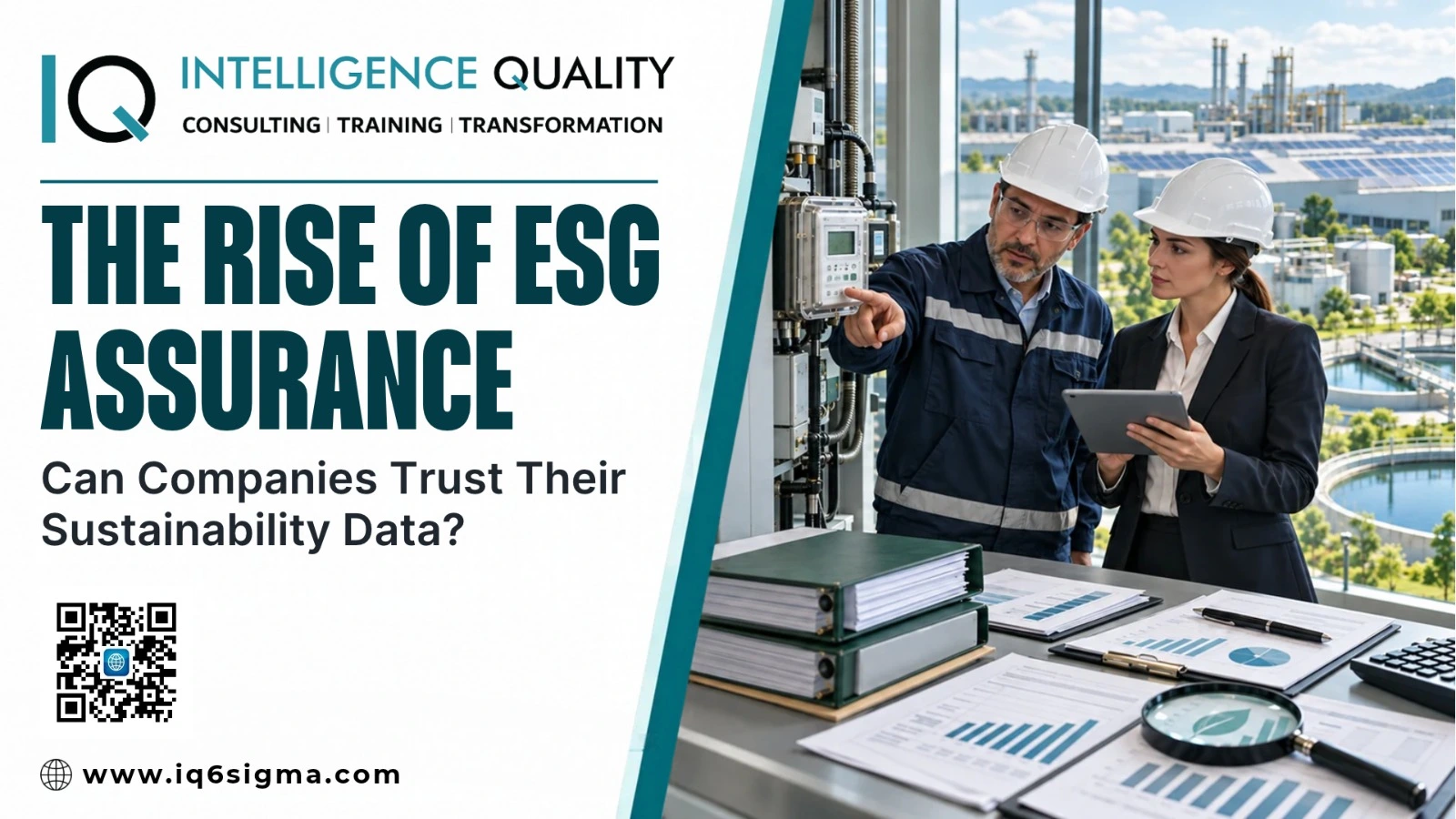
ESG reporting is becoming more structured. But one question is becoming increasingly important: Can stakeholders actually trust the sustainability data being reported?
Companies today collect information on greenhouse gas emissions, energy consumption, water, waste, employee metrics, diversity, safety, governance and other sustainability indicators. But collecting data is only the first step. The bigger challenge is ensuring that the information is accurate, complete, consistent, traceable and supported by evidence.
That is where ESG assurance is gaining importance.
ESG assurance is an independent evaluation of sustainability information to increase confidence in the reliability of reported data. Unlike simply reviewing whether a sustainability report has been published, an assurance engagement examines whether the underlying information has been prepared and presented in accordance with the applicable criteria.
The objective is straightforward:
Can stakeholders rely on the sustainability information being reported?
The International Auditing and Assurance Standards Board (IAASB) has developed ISSA 5000 - General Requirements for Sustainability Assurance Engagements as a global baseline for sustainability assurance. It is designed to apply across different sustainability topics and reporting frameworks and can be used by both professional accountants and other qualified assurance practitioners.
Sustainability information is increasingly being used by investors, lenders, customers, regulators, employees and business partners.
If two companies report similar ESG performance but use different data sources, calculation methods or assumptions, comparing their performance becomes difficult. Reliable ESG data therefore needs the same discipline expected from other important business information.
Organizations need to consider:
These questions are becoming increasingly important as sustainability information moves closer to mainstream corporate reporting.
One of the biggest changes taking place is the shift from treating ESG as a reporting exercise to treating sustainability information as a managed business data system.
For example, consider Scope 1 and Scope 2 greenhouse gas emissions.
A company may report its emissions figure, but an assurance process can require the organization to demonstrate the underlying methodology, activity data, emission factors, calculations, controls and supporting evidence.
The same principle can apply to other ESG indicators. Good ESG reporting starts long before the sustainability report is published. It starts with reliable processes for collecting, validating, documenting and governing the data.
The introduction of ISSA 5000 is an important development in the global sustainability reporting ecosystem.
The standard establishes a consistent approach to sustainability assurance and is intended to reduce fragmentation between different assurance practices and jurisdictions. It covers both limited and reasonable assurance engagements and can work with different sustainability reporting frameworks.
ISSA 5000 becomes effective for sustainability assurance engagements for periods beginning on or after 15 December 2026, with early adoption encouraged. However, individual jurisdictions still determine how and when the standard is adopted within their regulatory frameworks.
This distinction is important for companies operating in India and internationally.
India's ESG reporting environment has its own regulatory framework through SEBI's Business Responsibility and Sustainability Reporting (BRSR) requirements.Professionals looking to understand these evolving requirements can explore our ESG Course in India to develop their knowledge of ESG principles and reporting practices.
SEBI's recommendations have also addressed ESG information relating to value-chain partners and the assessment of BRSR Core disclosures. Importantly, SEBI's framework has used “assessment” rather than “assurance” in its regulatory terminology for BRSR Core, so organizations should distinguish Indian regulatory requirements from the broader international concept of sustainability assurance.
At the international level, IAASB currently lists India among jurisdictions where ISSA 5000 adoption is in progress.
The answer depends on the strength of the systems behind the numbers.
A sustainability report can look comprehensive while still having weaknesses in:
Data ownership → Data collection → Calculation methodology → Internal controls → Evidence → Review → Reporting
If these links are weak, the credibility of the final disclosure can also be affected. This is why organizations should not wait until an assurance engagement begins to examine their ESG data.
1. Where does our ESG data come from?
Identify the systems, departments, suppliers and individuals responsible for each data point.
2. Can every major figure be supported by evidence?
Invoices, utility records, meter readings, HR records, production data and other source documents may form part of the evidence trail.
3. Are our methodologies documented?
Definitions, boundaries, assumptions, emission factors and calculation methods should be clearly documented and consistently applied.
4. Who reviews the data?
ESG data should have clear ownership, review responsibilities and approval controls.
5. Could an independent practitioner reproduce our calculation?
If the answer is no, the organization may need to strengthen its ESG data governance before seeking assurance.
The real value of ESG assurance goes beyond identifying errors.
A stronger assurance-ready system can help organizations improve:
The IFRS Foundation also emphasizes the importance of reliable, decision-useful sustainability information under the ISSB Standards. IFRS S1 and IFRS S2 are designed so that reported sustainability information can be subject to assurance, although the requirement for assurance is determined by individual jurisdictions.
The next phase of ESG reporting will not be defined simply by how much data companies disclose. It will increasingly be defined by how reliable, comparable, traceable and decision-useful that data is.
As organizations strengthen their sustainability reporting practices, professionals need the knowledge to understand ESG frameworks, data governance and sustainability disclosures. Explore our ESG Course Online to build your understanding of ESG concepts and their practical application in business.
As sustainability information becomes more important to investors, regulators, customers and business partners, companies will need to move from:
“We have an ESG report.”
to:
“We have reliable ESG data, defined controls and evidence to support what we report.”
That is the foundation of credible ESG reporting.
ESG credibility is no longer only about making sustainability claims. It is about being able to substantiate them.
The companies that build strong ESG data governance today will be better positioned for the growing expectations around sustainability disclosure, assessment and assurance tomorrow.
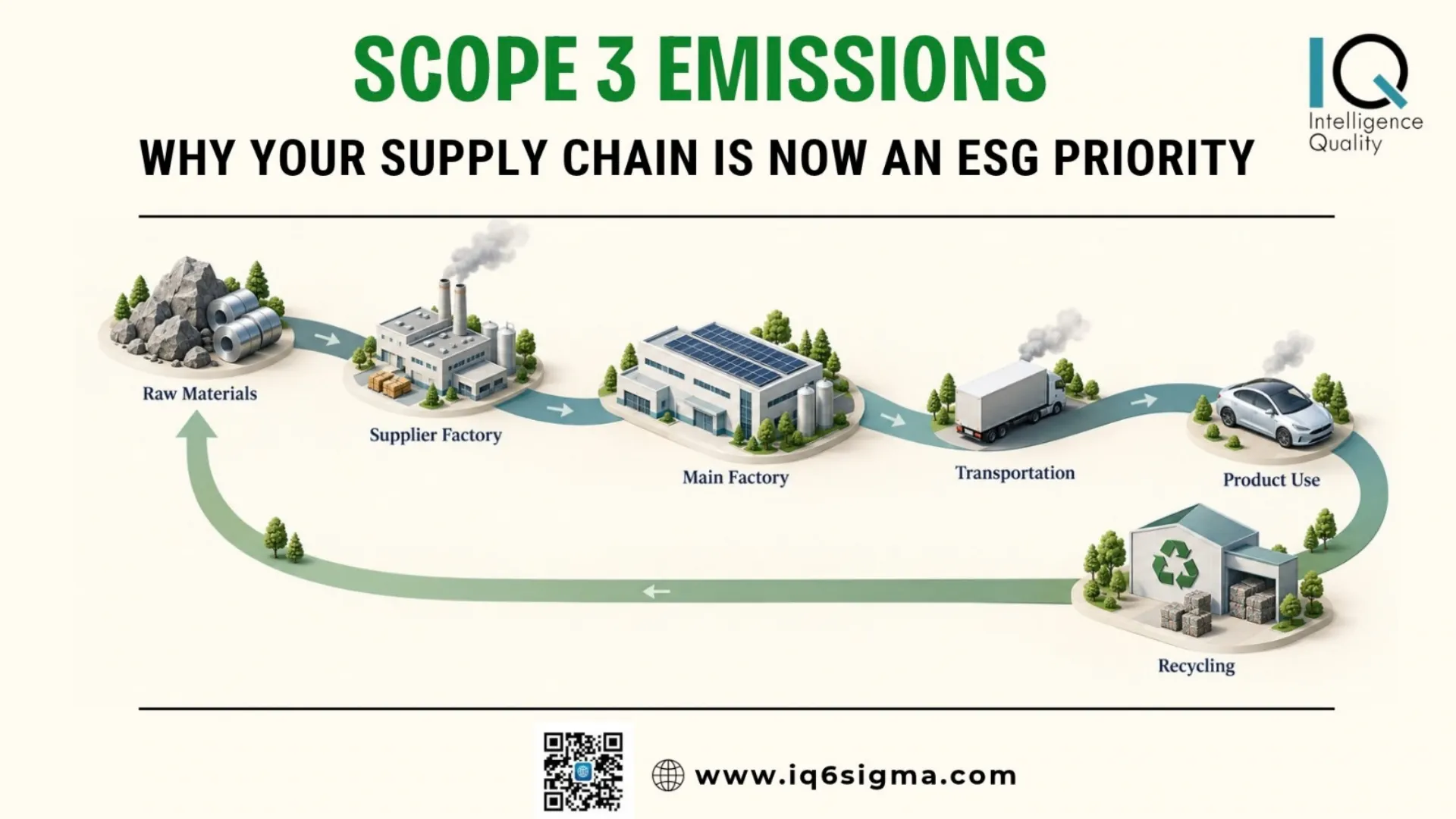
Understand Scope 3 emissions, why supply chain emissions matter for ESG, and how businesse...
Read More
For years, ISO 9001 has been associated with procedures, documentation, audits and certifi...
Read More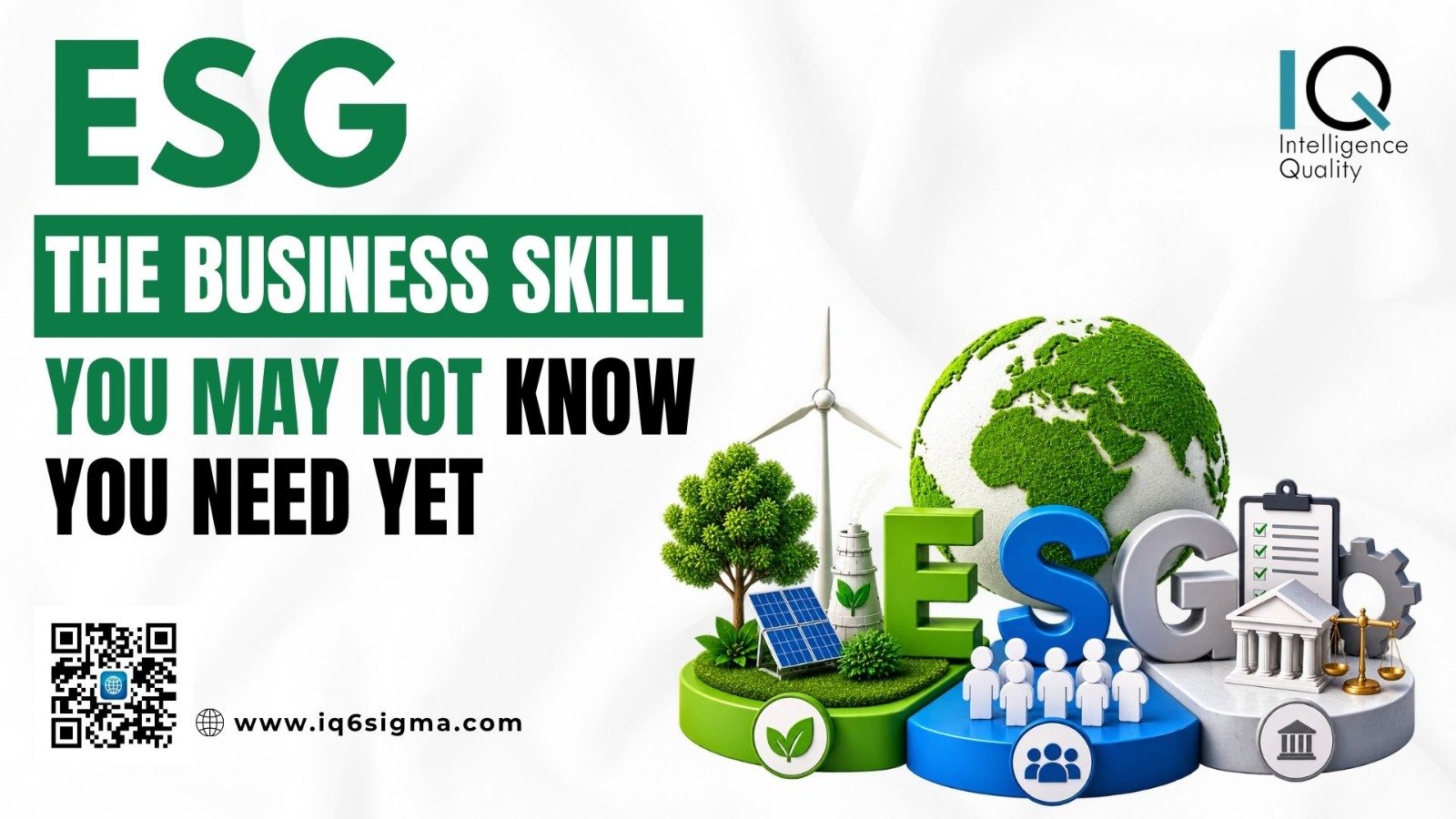
You have probably seen the word ESG everywhere, but if someone asked you today: “What does...
Read More