

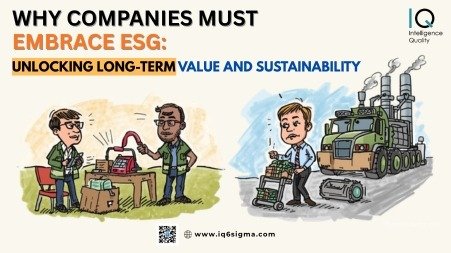
In today’s global business landscape, Environmental, Social, and Governance (ESG) principles are no longer optional. They are a strategic imperative for companies aiming to remain competitive, resilient, and socially responsible. Investors, customers, regulators, and employees are increasingly evaluating organizations not just on financial performance, but on how responsibly they operate.
ESG refers to a framework for evaluating a company’s environmental impact, social responsibility, and governance practices:
Unlike Corporate Social Responsibility (CSR), which often focuses on philanthropy, ESG is integrated into core business strategy, driving measurable performance across financial, operational, and social dimensions.
Investors increasingly prioritize companies with strong ESG performance. ESG-aligned companies demonstrate risk awareness, long-term sustainability, and resilience, making them more attractive for equity and debt financing. Global trends show that ESG-focused investments outperform peers during market volatility, reflecting both financial prudence and strategic foresight.
Consumers today are conscious of sustainability and ethical business practices. Companies with a strong ESG footprint build trust, loyalty, and differentiation in the marketplace. A robust ESG strategy signals that a company is committed not only to profit but to purpose - an essential factor in brand equity.
ESG initiatives often identify inefficiencies and opportunities for improvement. Examples include:
Environmental regulations, labor laws, and governance requirements are becoming stricter globally. A proactive ESG strategy anticipates regulatory risks, ensures compliance, and minimizes legal or reputational crises. Companies that ignore ESG risk financial penalties, supply chain disruptions, and investor backlash.
Employees increasingly want to work for organizations that reflect their values. Strong ESG practices enhance employee engagement, retention, and productivity by fostering a safe, inclusive, and purpose-driven workplace. Companies that ignore ESG may struggle to attract the talent necessary for innovation and growth.
Companies integrating ESG into decision-making build sustainable competitive advantage. ESG strategies enhance resilience, foster innovation, and create measurable social and environmental impact - all while contributing to financial performance and shareholder value.
ESG implementation varies across sectors, but the benefits are universal:
Each sector can tailor ESG practices to address unique challenges while benefiting from operational, reputational, and financial gains.
ESG is not a trend; it is a business transformation imperative. Companies that integrate ESG into their strategy and operations are better positioned to withstand risks, attract capital, engage talent, and drive sustainable growth.
In this century, profitability alone is not enough - responsibility drives resilience, and resilience drives long-term value. Companies that ignore ESG risk being left behind, while those that embrace it can thrive in a world that increasingly values sustainability, accountability, and purpose.