

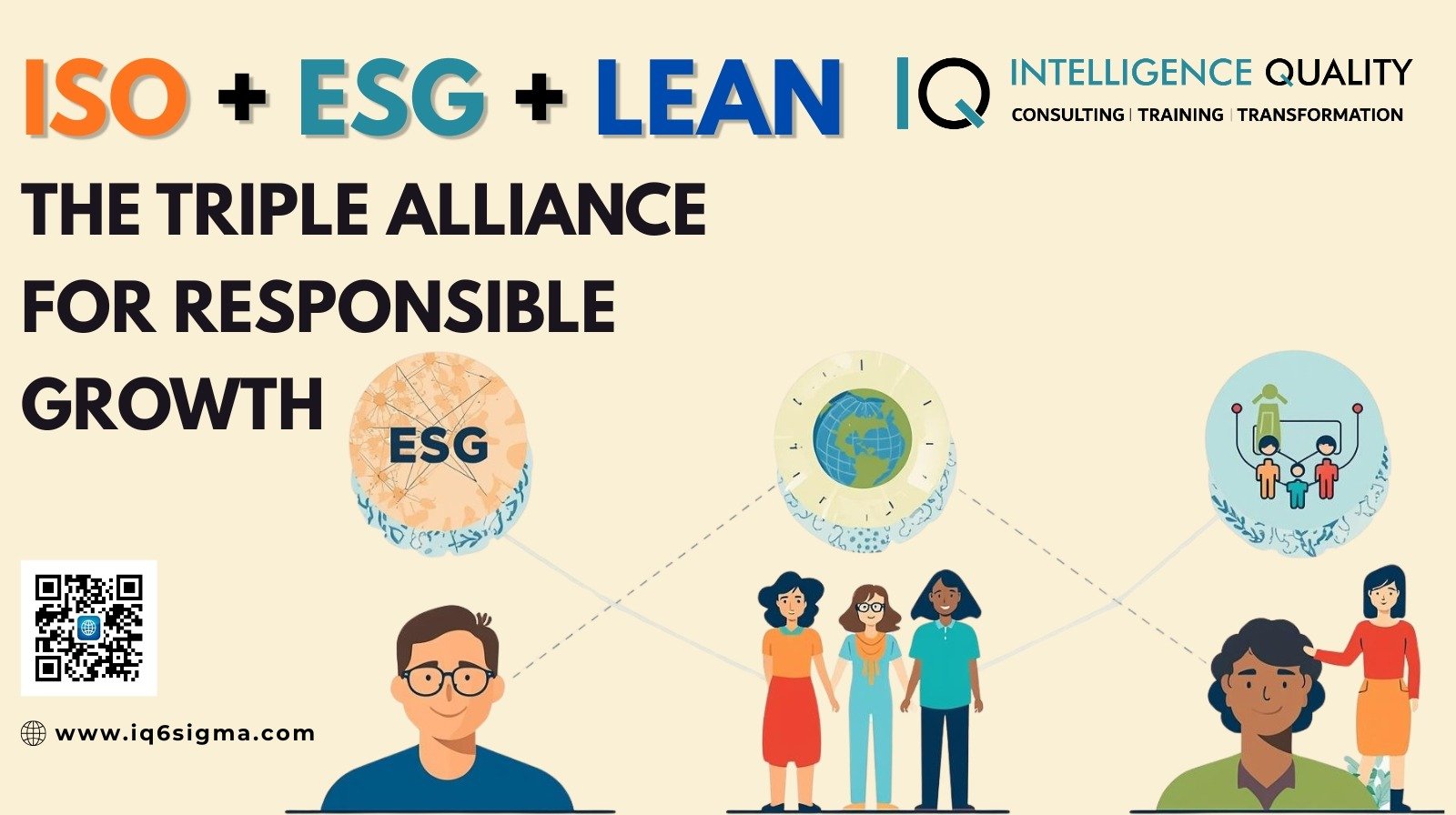
In the modern corporate landscape, success is measured by more than just the bottom line. Investors, customers, and society at large now demand that organizations demonstrate responsibility, sustainability, and operational excellence in equal measure. Achieving this level of accountability requires a cohesive strategy rather than isolated programs. ISO standards, ESG principles, and Lean management together offer a unified framework - a triple approach that not only enhances efficiency but also embeds environmental stewardship and social responsibility into the core of business operations.
ISO Standards provide a structured framework for quality, environmental management, and risk mitigation. Certifications such as ISO 9001 (Quality Management) and ISO 14001 (Environmental Management) offer organizations internationally recognized guidelines to standardize processes and improve reliability.
ESG (Environmental, Social, Governance) reflects a company’s commitment to sustainability, ethical practices, and transparent governance. Investors, customers, and regulators increasingly demand measurable ESG performance - from carbon footprint reduction to fair labor practices and corporate transparency.
Lean Thinking focuses on operational excellence by eliminating waste, enhancing productivity, and maximizing value for customers. It instills a culture of continuous improvement where small, incremental changes lead to significant, sustainable results.
Individually, each is powerful; together, they reinforce one another, creating resilient organizations that thrive in a rapidly changing world.
1. Aligning Standards and Sustainability:
ISO frameworks ensure that processes meet quality and environmental benchmarks. Lean methodology then optimizes these processes, reducing waste and inefficiency. ESG principles provide the purpose - ensuring that operational improvements also contribute to societal and environmental goals.
2. Driving Measurable Impact:
Lean tools like value stream mapping, root cause analysis, and PDCA cycles make ESG initiatives actionable. For example, reducing energy consumption or material waste not only improves operational efficiency but also strengthens ESG metrics, such as carbon footprint and resource utilization.
3. Embedding a Culture of Responsibility:
ISO certifications enforce compliance, ESG sets ethical and environmental expectations, and Lean fosters continuous improvement. Together, they create a culture where every employee understands their role in driving sustainable growth and accountable performance.
The success of this integrated approach depends heavily on leadership. Executives must champion transparency, continuous improvement, and sustainability, ensuring that employees see ISO, ESG, and Lean not as separate mandates but as complementary strategies.
By fostering cross-functional collaboration, leaders can break down silos between compliance, operations, and sustainability teams. This holistic perspective transforms responsible growth from a buzzword into a measurable, strategic advantage.
ISO, ESG, and Lean form a triple alliance that equips organizations to thrive responsibly in the modern business landscape. ISO provides the framework, ESG sets the purpose, and Lean ensures execution with efficiency and continuous improvement. Organizations that integrate these three pillars will not only improve operational performance but also enhance sustainability, build stakeholder trust, and achieve long-term resilience.
In an era where accountability and efficiency go hand in hand, the path to responsible growth is clear: standardize, optimize, and sustain.